Dharmendra Is Alive and Recovering: How False Rumors About the Bollywood Legend’s Death Shocked the Nation
The Internet in Mourning — Before the Truth Emerged
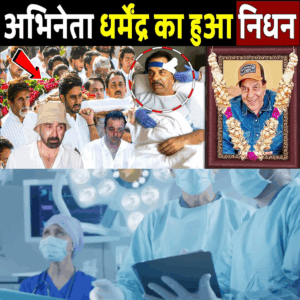
For several tense hours on Wednesday morning, India collectively held its breath. Social media timelines flooded with condolence messages, hashtags like #RIPDharmendra and #LegendNeverDies trended on X (formerly Twitter), and television tickers blared “Bollywood’s He-Man passes away at 89.”
But as the frenzy intensified, the truth surfaced: Dharmendra is very much alive. The beloved actor, who has defined Indian cinema for more than six decades, was indeed hospitalized in Mumbai’s Breach Candy Hospital for age-related complications, but his condition was stable and he is recovering under medical supervision, confirmed his wife Hema Malini and daughter Esha Deol.
How the Rumor Began
The confusion began early Wednesday when a few entertainment websites and YouTube channels uploaded unverified “breaking news” claiming Dharmendra had passed away after suffering a cardiac arrest. Within minutes, the story was picked up by aggregator accounts, reshared thousands of times, and spread like wildfire across social media platforms.
By the time fact-checkers stepped in, the narrative had already reached international audiences — with condolence tweets pouring in from Dubai, London, Toronto, and Los Angeles.
Ironically, the fake reports mirrored an eerily similar rumor from 2022, when the veteran actor had been briefly admitted to the same hospital for back pain. Then too, he appeared on video hours later, smiling and assuring fans, “Don’t worry about me. I am perfectly fine.”
Family Steps Forward to Quash Fake News
As speculation spiraled out of control, Hema Malini released a firm statement through her verified account on X:
“My husband Dharmendra ji is absolutely fine. Please do not believe or share such fake news. It is unforgivable to spread lies that cause unnecessary pain to the family and to his fans.”
Moments later, Esha Deol posted a photo of her father smiling from his hospital bed, captioned:
“Papa is doing well and recovering. Thank you all for your prayers and love.”
Within minutes, the tide shifted. Fans who had spent the morning mourning began sharing messages of relief and anger at the misinformation ecosystem that had yet again preyed on emotions.
The Breach Candy Hospital Update
According to hospital sources quoted by The Times of India and NDTV, Dharmendra was admitted on November 10 for observation after experiencing shortness of breath and fatigue. Doctors described his condition as “stable and improving.” He remains under precautionary monitoring due to his age — he turns 90 on December 8, 2025.
A spokesperson for the hospital clarified:
“Mr Dharmendra was never in a life-threatening condition. Routine tests are being conducted and he has been responding positively to treatment.”
Relatives including Sunny Deol, Bobby Deol, and Hema Malini have been visiting him regularly, while medical teams maintain strict privacy.
Bollywood’s Collective Sigh of Relief
As confirmation of his wellbeing spread, relief swept through the film fraternity. Actor Amitabh Bachchan, a long-time colleague, wrote:
“Thank God for the truth. Dharam ji is our strength, our warmth, our smile. May he live long.”
Salman Khan posted a photo of a young Dharmendra from Sholay, captioning it:
“Legends don’t leave us; they live forever in the way we walk, talk, fight, and love.”
From Akshay Kumar to Shah Rukh Khan, tributes transformed from mourning to celebration, with each recounting a personal memory of the star who inspired them to join films.
A Career that Defined Generations
Born on December 8, 1935, in Nasrali village, Ludhiana district, Punjab, Dharmendra Singh Deol’s journey from a railway clerk’s son to Bollywood’s most loved hero is nothing short of cinematic.
His debut came with Dil Bhi Tera Hum Bhi Tere (1960), but it was Phool Aur Patthar (1966) that transformed him into the “He-Man” of Indian cinema — the rare star who balanced rugged masculinity with tender vulnerability.
Through the 1960s and 1970s, Dharmendra dominated the silver screen with a streak of blockbuster hits including Anupama, Chupke Chupke, Sholay, Yaadon Ki Baraat, Dream Girl, and Seeta Aur Geeta.
Audiences adored his charm; critics admired his versatility. He could swing between intense drama (Bandini), slapstick comedy (Chupke Chupke), and romantic heroism (Satyakam) without missing a beat.
By the mid-1970s, he was one of the highest-paid and most bankable actors in the world’s most prolific film industry.
The Real-Life Hero
Off-screen, Dharmendra’s story was as dramatic as his movies. His relationship with Hema Malini, Bollywood’s “Dream Girl,” became the most talked-about romance of the era. Despite social backlash and legal hurdles, the couple married in 1980, and their bond endured decades of scrutiny and admiration alike.
Hema Malini once told Filmfare:
“He never let success make him arrogant. His kindness to co-actors, technicians, and even spot boys is why everyone still calls him ‘Dharam ji’ with respect.”
Even today, industry insiders recount tales of his generosity — paying crew salaries from his pocket, funding junior artists’ weddings, and visiting the families of technicians who had passed away.
A Father, Mentor, and Moral Compass
To his sons, Sunny and Bobby Deol, Dharmendra was more than a superstar. He was the standard of discipline and humility.
Sunny once said in an interview:
“Papa taught us that stardom fades, but humanity should never. He told me — never act bigger than the spot boy who brings you tea.”
That philosophy permeates the Deol family even today. When Gadar 2 became a blockbuster in 2023, Sunny credited his father first, calling him the “soul of our family and the reason we fight to stay real in an unreal industry.”
The Politics and the Poet
Few remember that Dharmendra also ventured into politics. In 2004, he contested the general elections as a Bharatiya Janata Party (BJP) candidate from Bikaner, Rajasthan, and served as a Member of Parliament until 2009.
But politics never dimmed his poetic soul. His book “Romance with Life” features verses that mirror his humility:
“Main filmon mein hero raha, par zindagi ke maidan mein ek aam aadmi hoon.”
(“I may have been a hero in films, but in life’s battlefield, I’m just an ordinary man.”)
A Life of Awards and Accolades
Over the decades, Dharmendra has been honoured with numerous awards, including the Filmfare Lifetime Achievement Award (1997) and the Padma Bhushan, India’s third-highest civilian honour (2012).
In 2018, he received the National Film Award for Yamla Pagla Deewana Phir Se, where he shared the screen with both sons — a full-circle moment in an illustrious career.
Internationally, retrospectives of his films have been screened in London, Melbourne, and Toronto film festivals, where curators call him “the bridge between Hollywood’s golden age masculinity and Indian melodrama.”
Fans React: From Grief to Gratitude
Outside Breach Candy Hospital, fans who had gathered through the morning began cheering as the truth spread. Many carried posters reading “Long Live the He-Man” and “We Love You, Dharam ji.”
One elderly fan, tears in her eyes, told reporters:
“I watched Sholay on my wedding day in 1975. He is part of my life’s memories. When I heard he was gone, it felt like a family member had left. Now I just pray he comes home soon.”
Younger admirers, too, flooded TikTok and Instagram with clips of his evergreen dialogues:
“Kutte! Main tera khoon pee jaoonga!”
and
“Basanti, in kutton ke saamne mat nachna!”
The Problem of Digital Misinformation
The episode also reignited debate about the ethics of online journalism. Within an hour of the rumor’s spread, multiple fake YouTube channels had gained millions of views by uploading AI-generated “tributes.”
Fact-checking portals like Alt News and Boom Live condemned the behavior, calling for stricter laws against spreading death hoaxes. “It’s not just misinformation — it’s emotional manipulation,” wrote Alt News editor Pratik Sinha.
The Indian Ministry of Information and Broadcasting has since announced that it is examining options to penalize repeat offenders who publish unverified health or death reports about public figures.
Dharmendra’s Unbreakable Connection with the Audience
Despite the chaos, what this incident truly revealed is the depth of affection Indians still hold for the actor. At nearly 90, he continues to embody a generation’s nostalgia — the days of single-screen theatres, hand-painted posters, and dialogues that echoed in classrooms and tea stalls alike.
In interviews, Dharmendra often downplays his stardom. “Fans made me a hero,” he once told Doordarshan. “I just tried to remain a good human being.”
That humility, combined with his expressive eyes and trademark dimpled grin, has kept him relevant long after his contemporaries faded from the limelight.
The Road Ahead
As of Wednesday evening, family sources confirmed that Dharmendra is expected to be discharged soon. He will continue treatment at home under medical guidance, focusing on physiotherapy and rest.
Hema Malini told reporters briefly outside their Juhu residence:
“He’s strong. He will be back on his feet soon. Please keep him in your prayers.”
Bobby Deol, who is preparing for his international debut in a Netflix production, has postponed his shoot schedule to stay with his father. Sunny Deol, meanwhile, requested privacy for the family:
“Thank you for your concern. Papa is fine. Please don’t spread unverified news.”
Legacy of the “He-Man”
If Dharmendra’s filmography were a book, it would read like the story of Indian cinema itself. He survived the black-and-white era, ruled the golden age of the 1970s, navigated the action-packed 1980s, and gracefully embraced supporting roles in the 2000s.
His on-screen presence blended physical strength with emotional intelligence. Few could deliver romantic lines with the same conviction they used to swing a steel rod in an action scene.
For millions, he represents an idea of India itself — resilient, emotional, simple, and full of heart.
Critic Anupama Chopra summarized it best:
“Dharmendra was the original mass hero — the one who could make you laugh, cry, and whistle in the same scene. He was our first pan-Indian superstar before that term even existed.”
Why Fans Will Keep Believing in Him
Even after this false alarm, fans admit they’re unwilling to imagine a world without Dharmendra. To them, he’s not merely an actor from another generation — he’s a reminder of innocence in storytelling, of heroes who smiled through pain and fought for love without irony.
In an old interview from 2015, when asked what he wanted to be remembered for, he smiled and said:
“Not for my films, but for my heart. I just wanted to love people — and I think I did.”
That line, perhaps more than any dialogue from Sholay, captures who Dharmendra truly is: a man whose greatest performance has been his life itself.
Conclusion: A Nation’s Collective Lesson
The false reports of Dharmendra’s death became a test case for the digital age — a reminder that even legends are vulnerable to misinformation, and that compassion must triumph over clicks.
As India exhales in relief, one truth stands firm: Dharmendra, the eternal He-Man, is alive — in spirit, in memory, and in the beating heart of every fan who ever cheered his name.
So until his next public appearance, fans will keep repeating the words that defined his legacy:
“Zindagi bahut khoobsurat hai” — Life is beautiful.
News
उस दिन के बाद ऑफिस का पूरा माहौल बदल गया। अब कोई भी किसी की औकात या कपड़ों से तुलना नहीं करता था। सब एक-दूसरे की मदद करने लगे। अर्जुन सबसे प्रेरणा देने वाला इंसान बन गया। रिया भी अब पूरी तरह बदल चुकी थी। वह विनम्रता से छोटे काम करने लगी और धीरे-धीरे सबका विश्वास जीतने की कोशिश करने लगी।
चायवाले से मालिक तक: इंसानियत की असली पहचान सुबह-सुबह जयपुर शहर की सबसे बड़ी मल्टीनेशनल कंपनी के ऑफिस के गेट…
रिया फूट-फूट कर रो पड़ी। उसके सारे सपने, घमंड और अभिमान पल भर में टूट गए थे। बाकी सभी कर्मचारी भी कांप गए। सब सोचने लगे, “हे भगवान, हमने भी कल उस चायवाले की हंसी उड़ाई थी। अब अगर मालिक को याद आ गया तो हमारी भी छुट्टी हो जाएगी।”
चायवाले से मालिक तक: इंसानियत की असली पहचान सुबह-सुबह जयपुर शहर की सबसे बड़ी मल्टीनेशनल कंपनी के ऑफिस के गेट…
दूसरे दिन का माहौल चायवाले से मालिक तक: इंसानियत की असली पहचान
चायवाले से मालिक तक: इंसानियत की असली पहचान सुबह-सुबह जयपुर शहर की सबसे बड़ी मल्टीनेशनल कंपनी के ऑफिस के गेट…
चायवाले से मालिक तक: इंसानियत की असली पहचान
चायवाले से मालिक तक: इंसानियत की असली पहचान सुबह-सुबह जयपुर शहर की सबसे बड़ी मल्टीनेशनल कंपनी के ऑफिस के गेट…
I gave a drenched old man shelter in my home. The next morning, he offered to buy my house for $1. “I’m not joking,” he said. “I can’t explain, but you need to leave it immediately.”
I gave a drenched old man shelter in my home. The next morning, he offered to buy my house for…
शीर्षक: “शिखर पर अहंकार नहीं, इंसानियत टिकती है”
शीर्षक: “शिखर पर अहंकार नहीं, इंसानियत टिकती है” सुबह के दस बजे थे। शहर के सबसे आलीशान रेस्टोरेंट “एमराल्ड टैरेस…
End of content
No more pages to load