All Is Not Well in NDA: Tension and Strategy Ahead of Bihar’s New Government Formation
The Bihar Assembly elections have concluded, and preparations are underway for the swearing-in ceremony of the new government, the new Chief Minister, and the new cabinet on November 20. While the NDA alliance publicly claims “all is well,” behind the scenes, significant tension and uncertainty persist.
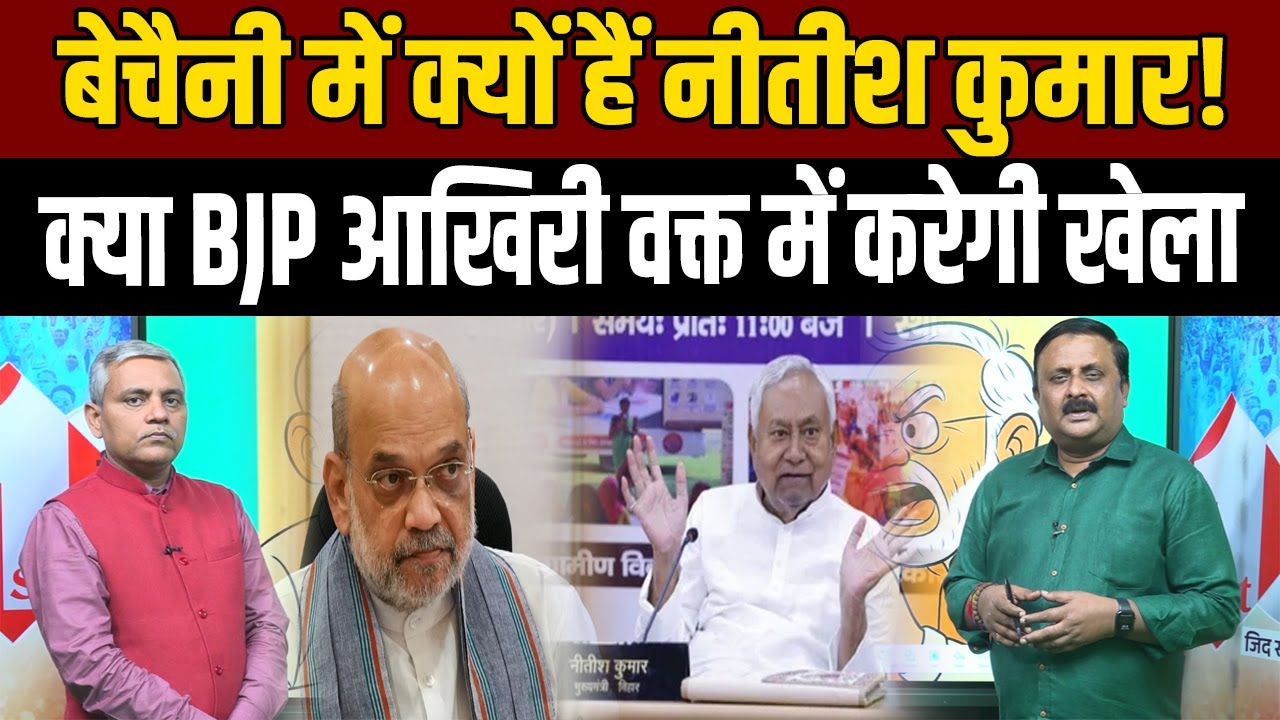
Despite public statements of unity, internal sources and political observers indicate that not everything is smooth within the NDA. Today, numerous journalists and political leaders reached out, questioning Chief Minister Nitish Kumar’s recent actions and their implications.
Cabinet Meeting and Unusual Timing
A cabinet meeting was held on November 17, following the election results announced on November 14. The meeting recommended the dissolution of the Bihar Assembly, effective November 19—an unusual move, as previous dissolutions have always been immediate. Nitish Kumar’s party, JDU, appears anxious, unwilling to give even an hour’s leeway to BJP, fearing sudden political maneuvers.
After the cabinet meeting, Nitish Kumar met with the Governor to formally recommend the dissolution of the Assembly from November 19. Vijay Chaudhary, a close aide and spokesperson for Nitish Kumar, reiterated this recommendation, emphasizing the new timeline.
Breaking Tradition: Why the Delay?
Traditionally, as seen in 2020 and 2015, the Assembly was dissolved with immediate effect after the cabinet meeting. For example, in November 2020, the Assembly was dissolved on the same day as the cabinet meeting, and Nitish Kumar was sworn in three days later. Similarly, in 2015, the dissolution and swearing-in followed a prompt schedule.
This year, however, the dissolution is set for two days after the cabinet meeting. Political analysts suggest this delay is due to JDU’s apprehension that BJP, now the dominant partner in the alliance, could exploit any gap to engineer a change in leadership.
The Numbers Game and Alliance Dynamics
The NDA currently consists of BJP, JDU, LJP, HAM, and RLSP. If JDU is excluded, BJP and its allies have about 117 MLAs—just five short of a majority. Given BJP’s history of political maneuvering, JDU fears that BJP could easily secure the remaining support and form a government without Nitish Kumar.
Even within JDU, there is uncertainty. Many MLAs are seen as pro-BJP, and Nitish Kumar’s grip on his own party is under question. The fear is palpable: Nitish Kumar wants to ensure there is no window of opportunity for BJP to act independently.
Upcoming NDA Legislative Meeting
On November 19, the NDA legislative meeting will be held to select the alliance leader. Each party will hold internal meetings to choose their legislative leader before the main NDA meeting. It is expected that Nitish Kumar will be elected as the leader and subsequently, the Chief Minister. Immediately after, he will submit his resignation to the Governor and present his claim to form the new government, leaving no gap for BJP to intervene.
Cabinet Formation and Power Sharing
Discussions regarding cabinet portfolios are ongoing. BJP is taking the lead in deciding ministerial positions, with smaller allies negotiating the number of posts they will receive. JDU’s share is fixed, but BJP is driving the process, reflecting its dominant position in the alliance.
While public narratives suggest unity, the reality is that JDU, and especially Nitish Kumar, remain wary of BJP’s intentions. The strategy to delay the dissolution of the Assembly and rush the government formation process is a direct response to the fear of a sudden political coup by the BJP.
As Bihar prepares for its new government, the underlying tension within the NDA alliance is a reminder that in politics, alliances can be fragile, and power dynamics can shift rapidly.
Stay tuned to First Bihar Jharkhand for more updates and in-depth analysis.
News
Tabu: A Life of Success on Screen, But Loneliness Off It
Tabu: A Life of Success on Screen, But Loneliness Off It Tabu, one of India’s most celebrated actresses, has won…
Legendary Comedian Asrani Passes Away at 84, Leaves Behind a Legacy of Laughter and Hidden Pain
Legendary Comedian Asrani Passes Away at 84, Leaves Behind a Legacy of Laughter and Hidden Pain Friends, greetings. Renowned film…
India’s Daughters Make History: Kranti Gaur Shines in Women’s World Cup 2025 Victory
India’s Daughters Make History: Kranti Gaur Shines in Women’s World Cup 2025 Victory The final over of the Women’s World…
Veteran Actor Dharmendra Admitted to ICU After Complaining of Breathlessness
Veteran Actor Dharmendra Admitted to ICU After Complaining of Breathlessness Legendary Bollywood actor Dharmendra has been admitted to the Intensive…
अमेरिका के ट्रेन स्टेशन पर विलियम एच कार्टर की कहानी (हिंदी में)
अमेरिका के ट्रेन स्टेशन पर विलियम एच कार्टर की कहानी (हिंदी में) कहते हैं, इंसान की असली पहचान उसके कपड़ों…
Deepika Padukone Opens Up About Her Challenging Pregnancy and Journey Into Motherhood
Deepika Padukone Opens Up About Her Challenging Pregnancy and Journey Into Motherhood Bollywood superstar Deepika Padukone has candidly spoken about…
End of content
No more pages to load