
From Bangles to Bloodshed: The Rise and Fall of Reshma’s Dream in a Uttar Pradesh Village
Introduction
In a small village on the outskirts of Lucknow, a modest bangle shop became the center of a tragic story that now haunts an entire community. What began as a loving mother’s sacrifice and a young couple’s shared struggle for stability, ended in a violent death, a murder charge, and questions about trust, temptation, and the weight of loneliness.
This is the story of Prithvi Singh, his wife Reshma, and his mother Leela Devi, residents of Semra village. It is a story of aspirations and frustrations, of a woman’s choices and a man’s rage, and of how fragile the foundations of marriage and morality can become under pressure.
A Modest Beginning: A Shop Built on Sacrifice
Prithvi Singh was known in Semra as a well-educated but unemployed young man. Despite his education, he had been struggling for months to find a stable job. About six months before the events of this story, his family arranged his marriage with Reshma, a young woman from a nearby area.
Reshma was not highly educated, but she was strikingly beautiful and full of enthusiasm. She loved dressing up, wearing jewelry, and dreamed of achieving something of her own. Her idea of independence was simple yet ambitious for a village girl: she wanted to open a bangle shop by the roadside.
Repeatedly, Reshma would tell her husband:
“I want to open my own shop. I don’t want to just sit at home.”
Prithvi, however, was in no position to fulfill her wish. The family’s financial condition was poor. With no steady income, he could barely support the household, let alone invest in a new business.
Watching her son worry, Leela Devi, Prithvi’s mother, made a difficult decision. She offered to mortgage her gold bangles, one of the few valuable possessions she had left from better days.
“Take my gold bangles,” she told her son. “Pawn them. Use the money to open Reshma’s shop. At least her dream will come true, and maybe it will help the family too.”
Prithvi reluctantly agreed. The bangles were mortgaged, money was raised, and a small bangle shop by the roadside in Semra was finally opened in Reshma’s name. It was more than a shop; it was a symbol of sacrifice, hope, and the start of a new chapter.
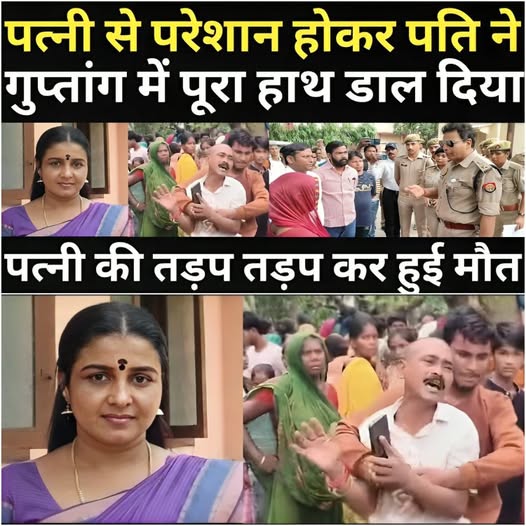
A Shop That Changed Everything
Reshma’s shop began to attract customers quickly. Located along a busy route, it drew women from nearby hamlets looking for bangles, bindis, and small decorative items. Reshma’s natural charm, her ability to talk to people, and her enthusiasm made the shop lively and inviting.
Money started coming in, slowly but steadily. For the first time, Reshma felt she had an identity beyond being someone’s daughter-in-law or wife. She was a shop owner.
But while Reshma’s small business saw growth, Prithvi’s job search continued to stagnate. Months had passed, interviews came and went, and there was no concrete offer. The financial and emotional burden weighed on him.
Then, in October 2025, a turning point came. Prithvi received a job offer from a company in Delhi. It was not a high-ranking post, but it was stable employment—exactly what he had been waiting for. The family rejoiced. For Leela Devi, it felt like a reward for years of struggle. For Prithvi, it was a chance to finally stand on his own feet.
Reshma, however, felt a very different emotion—fear of loneliness.
If her husband moved to Delhi, she would remain in the village, handling the shop and the house with only her mother-in-law for company. The thought unsettled her.
Prithvi tried to reassure her:
“Let me go first and settle down there. Once I am stable, I will bring you and Ma to Delhi as well.”
Eventually, Prithvi left for Delhi, and life in Semra changed. Reshma took charge of the shop and household, while Leela Devi managed the home as best as she could. Outwardly, everything looked normal. Inwardly, a dangerous emptiness was beginning to grow.
Loneliness and a Dangerous Opportunity
With her husband gone, Reshma’s days became monotonous. She would open the shop, talk to customers, count the earnings, cook meals, and sit with her mother-in-law. But once the shop closed and the village fell silent at night, loneliness began to gnaw at her.
The absence of her husband, the lack of emotional companionship, and the isolation of village life dug deep into her mind. According to the case narrative, her thoughts began to drift:
“My husband is far away. No one really understands how I feel. What if I make a friend… even if it’s a man?”
It was in this mental and emotional landscape that Ajmer Singh, a truck driver, entered her life.
One night, a truck stopped near Reshma’s shop. The driver, around 30 years old and described as reasonably good-looking, was facing a problem: one of his truck’s tyres had gone flat, and there was no puncture repair shop nearby. It was too late to safely continue driving.
Ajmer approached the house attached to the shop and requested shelter for the night.
Reshma did not decide alone. She spoke to her mother-in-law, Leela Devi. After some thought, Leela allowed the driver to stay in an outer room on the property. As a gesture of hospitality, Reshma prepared dinner and took it to him.
Over that shared meal, a conversation began. Ajmer asked where Reshma’s husband was. She told him about Prithvi working in Delhi and how she was left behind to manage the shop and home.
At some point during the interaction, Ajmer allegedly crossed a boundary—he held her hand. Reshma did not protest. One thing led to another, and that night, according to the later statements and charges, they entered into a physical relationship.
Ajmer paid her money afterward. Whether she saw it as “help,” “compensation,” or the beginning of something more transactional, Reshma did not refuse.
From One Night to a Pattern
What might have begun as a moment of weakness soon turned into a regular arrangement.
Ajmer proposed what he framed as an “opportunity”:
“I have many truck driver contacts—over 800 across various routes. If you cook meals for them, you’ll earn good money regularly.”
The figure he allegedly quoted was 810 drivers, highlighting the scale of his network and the potential business.
Reshma saw a chance for extra income far beyond what the bangle shop was generating. She discussed the proposal with Leela Devi—not the full nature of their relationship, but the business idea of cooking for drivers for pay. Leela, seeing only the financial aspect, agreed.
From then on, Ajmer began to come regularly. Reshma would cook food; he would collect it and pay. For about a month, this informal catering system continued. Money increased, and the bangle shop itself became secondary.
But under the surface, the boundaries that had already been crossed were about to be pushed even further.
A New Deal, A New Descent
On 28 November 2025, Ajmer was drinking with a friend, Kaluram. In a state of intoxication, Ajmer boasted about his relationship with Reshma—how she spent time with him when her husband was away.
Kaluram expressed a desire to meet her in the same way. Ajmer turned it into a transaction. He told Kaluram that for ₹5,000, he could arrange for him to spend time with Reshma as well.
Later, Ajmer called Reshma and proposed that she meet Kaluram too, in exchange for payment. According to the narrative, Reshma agreed.
That night, Leela Devi was allegedly given sleeping medication mixed into her food or drink, and she fell into a deep sleep. Ajmer and Kaluram came to the house. Reshma met them, and as per later statements, she engaged in a physical relationship with both, being paid afterward.
What began as a single act of infidelity had now become a recurring, paid arrangement involving multiple men. Ajmer and Kaluram reportedly continued to visit whenever they wished, as long as money was involved.
Reshma’s focus shifted increasingly away from her husband, her mother-in-law, and the small shop that had been built with such sacrifice. For her, money—and the attention it brought—became central.
Signs of Change: A Pregnancy and a Suspicion
By 20 December 2025, Reshma began experiencing frequent nausea and vomiting. Concerned, Leela Devi took her to a local doctor.
The diagnosis was clear: Reshma was pregnant.
Under normal circumstances, this would have been a moment of celebration for the family. But there was a critical problem—Prithvi had been away in Delhi for roughly two months and had not returned home during that period.
For Leela, the timeline raised immediate suspicion. She confronted the harsh possibility that her daughter-in-law might have been involved with someone else while her son was away.
That evening, she called Prithvi in Delhi and told him everything—about the pregnancy, the timeline, and her fear that something was terribly wrong.
A Husband’s Return and a Night of Rage
Shocked, humiliated, and confused, Prithvi returned to Semra the very next day. He spoke first with his mother, listening to her suspicions and observations. Then he turned to his wife.
That night, inside their room, Prithvi confronted Reshma. He asked her directly:
“Whose child are you carrying? What have you done behind my back?”
Reshma reportedly remained silent, neither confessing nor denying. For Prithvi, her silence was an answer in itself. In that moment, anger, betrayal, shame, and helplessness collided.
According to his own later statement to police, Prithvi lost control. In a fit of rage, he grabbed Reshma’s dupatta, wrapped it around her neck, and strangled her.
By the time his anger subsided, Reshma was dead.
Prithvi did not flee. He stayed in the room, sitting beside his wife’s lifeless body through the night—perhaps in shock, perhaps in guilt, perhaps unable to process what he had done.
Discovery, Arrest, and the Law Steps In
The next morning, when Reshma did not open the door and there was no movement from the room, Leela Devi grew worried. She called neighbours, and together they forced the door open.
Inside, they found Reshma’s body lying motionless and Prithvi sitting nearby.
The police were called. Upon arrival, they secured the scene and took Prithvi into custody. During interrogation, he confessed to killing his wife, stating that he had done so after learning of her pregnancy and believing that she had been unfaithful.
A chargesheet was filed against him on charges of murder. The details of the alleged affairs with Ajmer and Kaluram emerged through witness accounts, phone records, and other investigative leads.
As the legal process moved forward, the village was left grappling with shock and conflicting emotions.
A Village Reacts: Sympathy, Anger, and Moral Debate
News of the case spread quickly within and beyond Semra. Residents debated what had happened, often in harsh, judgmental terms:
Some condemned Reshma, calling her unfaithful and greedy.
Others criticized Prithvi for taking the law into his own hands and resorting to murder.
A few pointed out that Ajmer and Kaluram, who allegedly exploited Reshma’s vulnerability, also bore responsibility.
Many people quietly wondered whether the sheer loneliness and emotional deprivation Reshma felt had played a role in her choices.
On social media and in online discussions, the same questions echoed:
Was Prithvi justified in reacting the way he did?
Was Reshma’s path entirely her fault, or partly a result of isolation and manipulation?
Can we ever justify violence, even when betrayal is involved?
Do money and desire now override trust and dignity in relationships?
Beyond Blame: The Deeper Questions
While the legal system will decide Prithvi’s guilt and punishment, the broader issues raised by this incident go beyond one man and one woman.
-
The psychology of loneliness
With her husband away and little emotional support, Reshma fell into a spiral where attention, companionship, and money blurred into one. Her choices were wrong and harmful—but they did not happen in a vacuum.
The responsibility of men like Ajmer and Kaluram
Drivers or outsiders who exploit a married woman’s vulnerability for physical and financial gain cannot be seen merely as bystanders. They are an integral part of the chain of events.
A culture of silence around marital problems
Neither Reshma nor Prithvi had access to counselling, emotional support, or even a safe space to talk about their struggles. Problems that might have been addressed early on were allowed to grow in the shadows.
Violence as a response to betrayal
No matter how intense the feeling of betrayal, murder is never a lawful or moral solution. The law exists precisely to prevent individuals from becoming judge, jury, and executioner in moments of rage.
The cost of secrecy
Reshma hid her actions. Prithvi internalized his suspicions and anger. Leela handled her fears alone until she finally made an urgent call. Throughout, silence allowed tension to build until it exploded.
Conclusion: A Shop, a Sacrifice, and a Shattered Family
The bangle shop that once symbolized hope, sacrifice, and a fresh start now stands as a painful reminder of everything that went wrong. Leela Devi lost her daughter-in-law and saw her only son arrested. Prithvi lost his freedom and future. Reshma lost her life. And an entire village lost its sense of security about what goes on behind closed doors in “respectable” homes.
This case from Semra is not just about one woman’s infidelity or one man’s crime of passion. It is a stark reminder that relationships demand communication, honesty, and support—and that when these are missing, even ordinary lives can take extraordinary and tragic turns.
As the court decides Prithvi Singh’s fate, society must decide what it wants to learn from this case:
Will we keep whispering and judging from a distance?
Or will we begin to speak more openly about loneliness, desire, marital expectations, and the need for emotional support—before it is too late?
Until such conversations become normal, stories like Reshma’s will continue to repeat themselves, with different names, in different villages and cities across the country.
News

Doktorlar mafya babasının kısır olduğunu söyledi—bir garson ondan hamile olduğunu söyleyene kadar.
Doktorlar mafya babasının kısır olduğunu söyledi—bir garson ondan hamile olduğunu söyleyene kadar. . . . Chicago’nun karanlık ve acımasız yeraltı…

Tarihin En Acımasız Emri: 15.000 Esir Askeri Kör Edip Geri Gönderdi
Tarihin En Acımasız Emri: 15.000 Esir Askeri Kör Edip Geri Gönderdi . . . Karanlığın Yürüyüşü: Bir İmparatorun Soğuk Zaferi…

Köle Kadından Doğan Beyaz Çocuklar, Koca Bir Plantasyonu Nasıl Çökertti?
Köle Kadından Doğan Beyaz Çocuklar, Koca Bir Plantasyonu Nasıl Çökertti? . Köle Kadından Doğan Beyaz Çocuklar: Blackwood’un Çöküşü Güneyin yaz…

Bilim İnsanlarını Şaşkına Çeviren Çocuk: Elias’ın Vakası
Bilim İnsanlarını Şaşkına Çeviren Çocuk: Elias’ın Vakası . . . Bilim İnsanlarını Şaşkına Çeviren Çocuk: Elias’ın Vakası 1972 yılının dondurucu…

1997’de Sarıçöl’de Kaybolan Selim Karabey – 16 Yıl Sonra Bulunan Mataranın Sakladığı Gizemler
1997’de Sarıçöl’de Kaybolan Selim Karabey – 16 Yıl Sonra Bulunan Mataranın Sakladığı Gizemler . . . 1997’DE SARIÇÖL’DE KAYBOLAN SELİM…

Sıradan Bir Tokat, 20 Yıllık Sırrı Ortaya Çıkardı: O Adam Geri Döndü!
Sıradan Bir Tokat, 20 Yıllık Sırrı Ortaya Çıkardı: O Adam Geri Döndü! . . . Sıradan Bir Tokat, 20 Yıllık…
End of content
No more pages to load