
“The Ghost on the Stairs”: How Two Village Women Exposed a Chilling Crime in Rajasthan
Introduction
For weeks, the villagers of Barkheda in Rajasthan’s Alwar district whispered about ghosts. A young woman, Neha, claimed she sensed a presence in her room at night. She would wake up disoriented, her clothes torn, with no memory of what had happened. In a deeply superstitious rural setting, it was easy to blame spirits.
But the truth, when it emerged, was far more disturbing than any ghost story.
This is the story of Neha, her father-in-law Mangta Ram, neighbour Kanta Devi, and Kanta’s husband Mohan Singh—a story that begins with fear of the supernatural, and ends with a criminal conspiracy exposed by courage, police work, and the refusal of two women to remain silent.
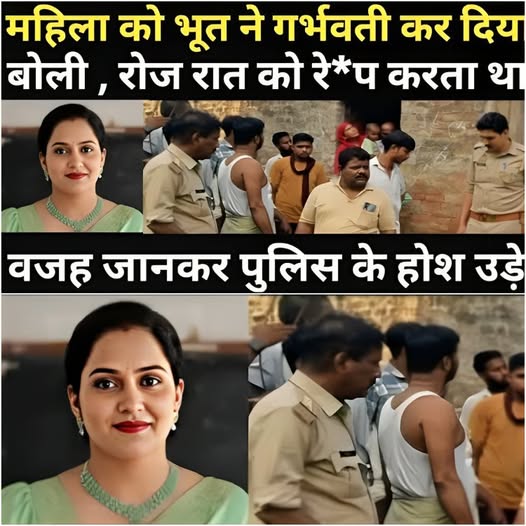
A Quiet Family in Barkheda
Barkheda is one of many villages in Alwar—mud houses, narrow lanes, and a life shaped by farming, cattle, and daily labour. In one such lane lived Mangta Ram, a man known locally for his hard work and honesty. He ran a small milk dairy, supplying fresh milk to nearby homes and shops.
His family looked, from the outside, perfectly ordinary:
Mangta Ram – the head of the family, respected milkman.
His son, Ravi – educated, polite, searching for steady employment.
Ravi’s wife, Neha – responsible, soft-spoken, and devoted to her family.
Every morning, as the first light touched the village, Neha would begin her day—sweeping the courtyard, cooking, fetching water, feeding the cattle. Mangta Ram would leave for the dairy. Ravi would often be away, traveling to towns and cities in search of a job.
To neighbours, Neha’s life appeared routine. But inside, she lived with a quiet, growing fear.
The “Presence” in the Room
Neha had always been a little uneasy at night. The old house creaked, animals moved in the lanes, and the wind rustled through gaps in the wooden doors. But recently, a different kind of fear had taken hold.
On several occasions, she felt as if someone was in her room at night. She could not see anyone clearly—but she sensed movement, a shadow, a presence. Sometimes, her head would feel heavy, her body weak, and she would quickly slip into a deep, unnatural sleep.
One morning, she woke up and found her clothes torn. She was disoriented and frightened. She had no memory of what had happened.
She gathered her courage and asked her father-in-law:
“Pitaji, did you come into my room last night?”
Mangta Ram firmly denied it.
“No, bahu. I was sleeping in the front room. You must have had a bad dream. There are no ghosts here. Don’t worry. If something is wrong, I will handle it.”
But it happened again. And again.
Each time, Neha felt a strange heaviness before sleep, and each time she woke up confused, disturbed, and with signs that something was very wrong. Unable to make sense of it, she began to question herself. Was this truly a ghost? Was she losing her mind? Or was someone lying?
Ravi’s Job and Neha’s Loneliness
Around this time, Neha’s husband, Ravi, came across an opportunity. With the help of his friend Mohan Singh, he secured a job at a private bank in Alwar city. The salary was modest, and it would be difficult to support two people in the city on that income.
Neha, understanding their financial situation, encouraged Ravi to take the job even if it meant she could not join him immediately.
Ravi moved to Alwar for work. Neha stayed behind with her father-in-law in the village house.
Her daily routine continued—but now, nights felt even longer, lonelier, and more terrifying. With her husband away, her attempts to express her fears sounded, even to her own ears, like superstition.
Confiding in a Friend: Kanta Devi Enters the Story
Unable to bear the anxiety alone, Neha turned to her neighbour, Kanta Devi, who lived a few houses away. At first, Kanta laughed it off.
“You and your ghost stories! You’re watching too many TV serials.”
But Neha persisted. She showed her torn clothes. She described waking up with no memory of what had happened during the night. The fear in her eyes was unmistakable.
Kanta’s expression changed. The laughter stopped.
Together, the two women discussed possibilities. Was someone entering the house at night? Was Neha being drugged? Or was it, as the village gossip occasionally suggested, “some spirit” attached to the house?
Neha made a suggestion that would prove crucial:
“Stay with me for a few nights. Sleep in my room. If something happens, at least we will both know.”
Kanta discussed this with her husband, Mohan Singh. He agreed, apparently supportive of Kanta keeping Neha company, especially if Neha’s health was being affected by fear and sleeplessness.
But what none of the women knew was that Mohan himself was part of the dark secret that would soon emerge.
The Night of Courage
One night, Kanta came over to Neha’s house with some clothes and a small bag. The women finished their household chores, cooked dinner, and locked the main door carefully. They both drank milk before going to bed, spoke for a while, and then lay down in Neha’s room.
Outside, Barkheda was quiet. The kind of silence that makes even small sounds echo louder.
In the middle of the night, something strange happened.
Both women started to feel unusually drowsy, as if their bodies were shutting down against their will. They did not remember falling asleep. It was sudden, heavy, and unnatural.
When they woke up in the morning, they were shocked: their clothes were torn, and they felt violated and weak.
Now, it was not just Neha’s word against doubt. Both women had experienced the same thing, on the same night, in the same house.
Kanta, once a skeptic, was now convinced:
“This is not a ghost. This is not imagination. Something is happening to us. And we are not going to stay silent.”
Turning to the Police
Determined to seek the truth, Neha and Kanta travelled to the nearby police station in Alwar. There, they met Sub-Inspector Deepak Saxena.
Initially, their story sounded like many others in rural India—talk of ghosts, shadows, and mysterious fainting spells. But as they described torn clothes, repeated incidents, and the pattern of their sudden unconsciousness, Saxena sensed something else.
This wasn’t a supernatural problem. This was potentially a criminal case involving drugging and sexual assault.
Saxena made his position clear:
“This is not the work of spirits. Someone is entering your house at night and committing a serious crime. We will not rely on rumours. We will investigate.”
He proposed a plan.
The Trap: Police Stakeout in Barkheda
The police decided to lay a trap at Neha’s house. That night, four policemen, dressed in plain clothes, took up hidden positions around and near the house. Some hid behind trees. Others stayed close to the boundary wall, watching silently.
Inside, Neha and Kanta followed their usual pattern. They locked the main door, drank milk, went to their room, and lay down to sleep. Unknown to them, they had once again consumed milk laced with sedatives, as the investigation would later reveal.
Around midnight, the officers noticed movement.
A man was approaching Neha’s house carrying a wooden ladder. He carefully placed it against the side wall leading up to the roof, clearly familiar with the structure. Moving quietly, he began to climb.
This was no ghost. This was a human being who knew the house well enough to avoid the main entrance and use an external route to get inside.
As he neared the rooftop entrance, the police rushed in.
They shouted, surrounded him, and pulled him down before he could disappear inside. The man tried to resist, but was quickly overpowered.
When they brought him down and shone a flashlight on his face, the women’s world—and the village’s illusions—shattered.
The intruder was Mohan Singh, Kanta’s own husband.
The Shocking Conspiracy
Mohan was arrested on the spot and taken to the police station for interrogation. Under questioning and confronted with the circumstances in which he was caught, he eventually broke down and confessed.
The truth was worse than anyone had imagined.
According to Mohan’s statement and subsequent investigation:
He had been colluding with Neha’s father-in-law, Mangta Ram.
The two men had been mixing sedatives into the milk served at night to Neha—and later also to Kanta when she stayed over.
Once the women were unconscious, one or both of them would enter the room and exploit them.
To maintain the illusion of something “mysterious,” they allowed the women to believe it might be a ghost or a supernatural force.
When confronted, Mangta Ram was also arrested. He too, under pressure and evidence, confessed to his involvement.
The “ghost” that had haunted Neha’s room was not a spirit—it was a criminal conspiracy carried out by two men she trusted: her father-in-law and her neighbour’s husband.
A Village in Shock
When the news broke in Barkheda, disbelief spread like fire.
How could Mangta Ram, a man known for running an honest dairy business, be involved in such a crime? How could Mohan Singh, who had agreed to let his wife stay with Neha for her safety, be the one using a ladder to sneak into the house at night?
The very idea that two respected men from the community could be behind such acts shook people’s faith.
Women began to talk in hushed tones. Men shook their heads in disbelief. But amidst the shock, a different kind of conversation also began—one about women’s safety, trust, and the dangers of silence.
For once, the whispers turned into open discussion.
The Legal Battle: Evidence, Testimony, and Conviction
The police filed a detailed chargesheet against Mohan Singh and Mangta Ram, including sections related to:
Administering intoxicating substances,
Sexual assault,
Criminal conspiracy, and
Trespassing with intent to commit a crime.
Neha and Kanta agreed to testify in court. It was not easy; in many rural areas, women are discouraged from speaking openly about such crimes, fearing social stigma.
But they stood firm.
In court, they recounted their experiences. Police presented:
The trap operation details,
The seizure of the ladder,
Medical reports confirming sedation,
Forensic evidence,
And the confessional statements of the accused.
The defence could not dismiss the fact that Mohan had been caught red-handed trying to enter the house at night using a ladder. Nor could they explain away the pattern of drugging and the women’s repeated experiences.
After a detailed hearing, the judge delivered a strong verdict.
He emphasized that:
“The safety and dignity of women is paramount. Crimes committed under the cloak of superstition or by exploiting trust must be punished with severity, so that society receives a clear message.”
Both Mohan Singh and Mangta Ram were sentenced to rigorous imprisonment.
From Victims to Voices: Neha and Kanta’s New Role
Neha’s ordeal did not end with the conviction—but something within her changed. She was no longer the frightened woman who whispered about shadows. She had confronted real monsters and helped bring them to justice.
She told her husband Ravi everything—every incident, every suspicion, every moment of fear.
Ravi was devastated. He regretted not taking her initial fears more seriously.
“I should have listened to you,” he told her. “You were asking for help, and I dismissed it as imagination. I am sorry.”
He promised to stand by her, not only as a husband but as a partner in her newfound mission.
Together with Kanta, Neha decided that their story would not simply be a tale of personal suffering. It would be a starting point for change.
Women’s Awakening in Barkheda
With the support of the local police and some social workers, Neha and Kanta helped form a Women’s Safety Committee in Barkheda. The committee:
Encouraged women to speak openly about harassment or abuse.
Organized meetings where police officers explained legal rights and procedures.
Provided a safe space for women to share concerns without fear of ridicule.
Promoted awareness about the misuse of superstition to cover up crimes.
Police officers began visiting the village periodically, conducting workshops on:
How to file a complaint,
What constitutes a crime,
Why women must never blame themselves,
And how the law protects victims.
Gradually, the culture in Barkheda began to shift. Women felt more confident discussing their safety. Men were reminded, repeatedly and publicly, that respect and consent are non-negotiable.
Beyond Barkheda: A Story with a Message
Neha and Kanta’s story is not just about one house or one village. It reflects broader realities:
Superstition can be weaponized.
When crimes are disguised as “ghostly activity,” victims may doubt themselves instead of seeking help.
Silence empowers abusers.
Had Neha remained silent, the abuse could have continued indefinitely. Speaking up was the turning point.
Trust can be misused by those closest.
The accused were not strangers—they were family and neighbours. This underlines the importance of believing women, even when the accused are “respectable” men.
Police and law are critical allies.
Sub-Inspector Deepak Saxena’s refusal to dismiss the case as superstition and his decision to set a trap were crucial.
Courage is contagious.
Neha’s step inspired Kanta. Together, they inspired many other women to question, speak, and demand justice.
Conclusion: Climbing the Staircase of Truth
The story that villagers once described as “a ghost in Neha’s room” is now known by another name: the staircase of truth.
It wasn’t a ghost climbing those stairs—it was a man. It wasn’t fate—it was crime. And it wasn’t silence that ended it—it was courage.
Neha and Kanta proved that the path to justice is steep and frightening, but every step taken with truth and determination leads upward.
Their message, now shared in meetings, homes, and schools, is simple:
Women’s safety and dignity are non-negotiable.
No one should suffer in silence out of fear or shame.
The law is not an enemy—it is a shield.
And when women stand together, even the most powerful lies collapse.
Their story may have begun in a small village in Alwar, but its lesson is for everyone:
The hardest staircase to climb is the one that leads to the truth. But once you climb it, you never have to live in the dark again.
News

Doktorlar mafya babasının kısır olduğunu söyledi—bir garson ondan hamile olduğunu söyleyene kadar.
Doktorlar mafya babasının kısır olduğunu söyledi—bir garson ondan hamile olduğunu söyleyene kadar. . . . Chicago’nun karanlık ve acımasız yeraltı…

Tarihin En Acımasız Emri: 15.000 Esir Askeri Kör Edip Geri Gönderdi
Tarihin En Acımasız Emri: 15.000 Esir Askeri Kör Edip Geri Gönderdi . . . Karanlığın Yürüyüşü: Bir İmparatorun Soğuk Zaferi…

Köle Kadından Doğan Beyaz Çocuklar, Koca Bir Plantasyonu Nasıl Çökertti?
Köle Kadından Doğan Beyaz Çocuklar, Koca Bir Plantasyonu Nasıl Çökertti? . Köle Kadından Doğan Beyaz Çocuklar: Blackwood’un Çöküşü Güneyin yaz…

Bilim İnsanlarını Şaşkına Çeviren Çocuk: Elias’ın Vakası
Bilim İnsanlarını Şaşkına Çeviren Çocuk: Elias’ın Vakası . . . Bilim İnsanlarını Şaşkına Çeviren Çocuk: Elias’ın Vakası 1972 yılının dondurucu…

1997’de Sarıçöl’de Kaybolan Selim Karabey – 16 Yıl Sonra Bulunan Mataranın Sakladığı Gizemler
1997’de Sarıçöl’de Kaybolan Selim Karabey – 16 Yıl Sonra Bulunan Mataranın Sakladığı Gizemler . . . 1997’DE SARIÇÖL’DE KAYBOLAN SELİM…

Sıradan Bir Tokat, 20 Yıllık Sırrı Ortaya Çıkardı: O Adam Geri Döndü!
Sıradan Bir Tokat, 20 Yıllık Sırrı Ortaya Çıkardı: O Adam Geri Döndü! . . . Sıradan Bir Tokat, 20 Yıllık…
End of content
No more pages to load