WAS LIFE OF PUJA FAKE? THE CLASSISM DEBATE BEHIND RURAL INFLUENCER’S VIRAL SUCCESS
.
.
Social Media, Authenticity, and Class Bias: A Deepening Debate
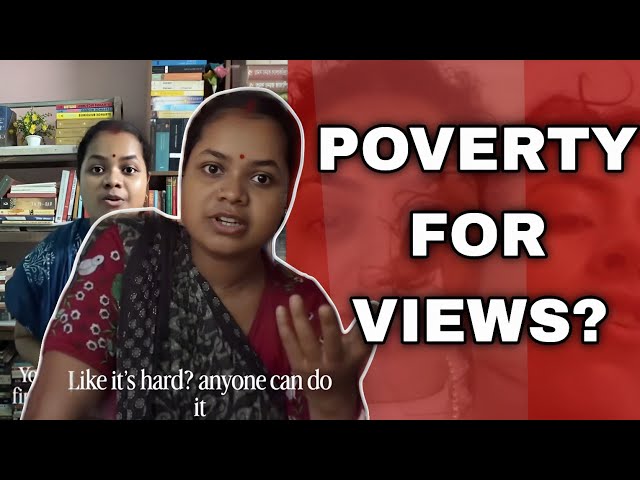
Recently, a debate emerged around a content creator from a rural background who wears traditional attire, speaks in English, and discusses books, films, and politics. While her content attracted a large audience, it also sparked suspicion. Many questioned whether her persona was authentic or carefully crafted by a marketing agency to appeal to a specific audience segment.
This issue extends far beyond a single individual—it reflects a broader concern within the entire social media ecosystem.
Authenticity vs. Perception
Authenticity has become a highly valued trait on social media. Audiences increasingly seek “real” content—unfiltered and genuine. However, defining what is “real” is not always straightforward.
When someone behaves outside our expectations, we often label them as “fake.” For instance, if a person from a rural setting speaks fluent English, discusses global cinema, and reviews literature, many find it unusual. But does “unusual” necessarily mean “inauthentic”?
The real issue often lies in our perception, not in the individual’s reality.
Class Bias and Prejudice
A key element in this debate is class bias. Society often assumes that certain knowledge, language skills, and lifestyles belong exclusively to the upper class.
When someone challenges these assumptions, instead of being appreciated, they are often questioned. Comments like “How can a village girl speak such good English?” or “Where does she get so many books?” reflect not just curiosity, but deeply rooted prejudice.
Such thinking is not only unfair but also harmful. It diminishes the efforts of individuals who strive to grow despite limited resources.
The Reality of Agencies and Content Creation
There is a common belief that successful content creators must have a professional team or agency behind them—handling scripts, editing, and overall image-building.
In reality, this is often not the case.
Most agencies primarily focus on securing brand deals. The actual content creation—filming, editing, scripting—is usually done by the creators themselves. While top-tier influencers may have teams, it is unrealistic to assume that every successful creator is backed by a hidden agency manufacturing their personality from scratch.
Moreover, in today’s highly competitive environment, agencies typically prefer working with creators who already have an established audience rather than investing heavily in building a completely new, artificial persona.
Hate Culture and Online Judgment
Another harsh reality of social media is the prevalence of hate culture.
When someone stands out or achieves success, they often become a target of criticism. While constructive criticism is valid, questioning someone’s entire identity without evidence leads to what can be described as an “online trial.”
This behavior can significantly impact mental health. Many creators face anxiety, stress, and emotional distress due to trolling, harassment, and baseless accusations.
It is important to distinguish between questioning and discrediting. Asking questions is acceptable, but creating and spreading theories to undermine someone’s credibility is not.
Women, Independence, and Discomfort
An important dimension of this issue involves gender dynamics.
When women express their opinions openly—especially on topics like feminism, politics, or social issues—they often face heightened scrutiny. There is an unspoken expectation for them to remain “simple,” talk about personal struggles, and stay within certain boundaries.
However, when they break out of these expectations—earning money, expressing independent views—they can become “threatening” to some audiences.
This discomfort often fuels conspiracy theories and negative narratives.
Time Management and Personal Effort
Another frequently raised question is: how can someone manage household responsibilities, study, and create content simultaneously?
The answer lies in time management and priorities.
Everyone has the same 24 hours in a day, but how those hours are utilized varies. If someone dedicates time to their passions, it is not extraordinary—it is intentional.
Family support also plays a crucial role. A supportive environment can significantly enhance an individual’s ability to pursue their goals.
The Democratization of Social Media
One of the greatest strengths of social media is its inclusivity. It is not restricted to any particular class, language, or background.
Today, someone from a rural area has access to the same platforms as someone from a metropolitan city. They can share their voice with a global audience.
Therefore, the idea that certain spaces or skills belong only to specific groups is outdated and inaccurate.
What Can We Learn?
This situation offers several important lessons:
Avoid making assumptions based on someone’s background.
Practice respectful criticism instead of making baseless accusations.
Appreciate effort, especially when resources are limited.
Understand that social media is a mix of both reality and performance.
If you dislike content, simply scroll past it.
Conclusion
Social media is a complex space where the line between reality and perception can sometimes blur. However, this does not justify doubting everyone who defies our expectations.
It is easy to label someone’s success as “fake,” but much harder to recognize the effort and determination behind it.
The next time you encounter someone who challenges your assumptions, consider the possibility that they are simply living life on their own terms—and there is nothing wrong with that.
Ultimately, the true purpose of social media is to give everyone a voice—and every story deserves a chance to be heard.
News
गेहूं काटने गई बहन के साथ गलत होने पर भाई ने मचा दिया कोहराम/
गेहूं काटने गई बहन के साथ गलत होने पर भाई ने मचा दिया कोहराम/ . . Title: एक परिवार की…
महिला के साथ हुआ बड़ा हादसा/खेत में चारा काटने बुलाई थी/
महिला के साथ हुआ बड़ा हादसा/खेत में चारा काटने बुलाई थी/ . . Title: मीनाक्षी देवी की हत्या: एक दुखद…

Fly91 Flight Video: 4 घंटे तक मौत से लड़ते रहे मुसाफिर..और फिर जो हुआ उसे देखकर आपकी रुह कांप जाएगी!
Fly91 Flight Video: 4 घंटे तक मौत से लड़ते रहे मुसाफिर..और फिर जो हुआ उसे देखकर आपकी रुह कांप जाएगी!…

पुलिस वालों ने स्कूल की दो लड़कियों के साथ किया शर्मनाक हरकत।
पुलिस वालों ने स्कूल की दो लड़कियों के साथ किया शर्मनाक हरकत। . . Title: आईपीएस अंजलि सिंह और इंस्पेक्टर…
पत्नी ने अपने पति के साथ कर दिया बड़ा कां#ड/पति के साथ हुआ बहुत बड़ा हादसा/
पत्नी ने अपने पति के साथ कर दिया बड़ा कां#ड/पति के साथ हुआ बहुत बड़ा हादसा/ . . Title: एक…
दादा ने अपनी सगी पोती के साथ कर दिया बड़ा कां#ड /पोल खुली तो पुलिस हैरान रह गई/
दादा ने अपनी सगी पोती के साथ कर दिया बड़ा कां#ड /पोल खुली तो पुलिस हैरान रह गई/ . . Title:…
End of content
No more pages to load